Kina pendant ceiling light

Price range: 515,46 € through 6.584,82 € IVA inc.

(base price)
Clear

At your service

If you love this product but want something very personal or can't find what you're looking for, please contact us; we'd be happy to provide you with alternatives.

Additional information

Weight0,75 kg
Dimensions57 × 26 × 5 cm
Made to order

Sobre Pedido

Production time

6-8 weeks

Assembly required

Requires assembly

Diameter

44, 60, 80, 100, 140

Lampshade color

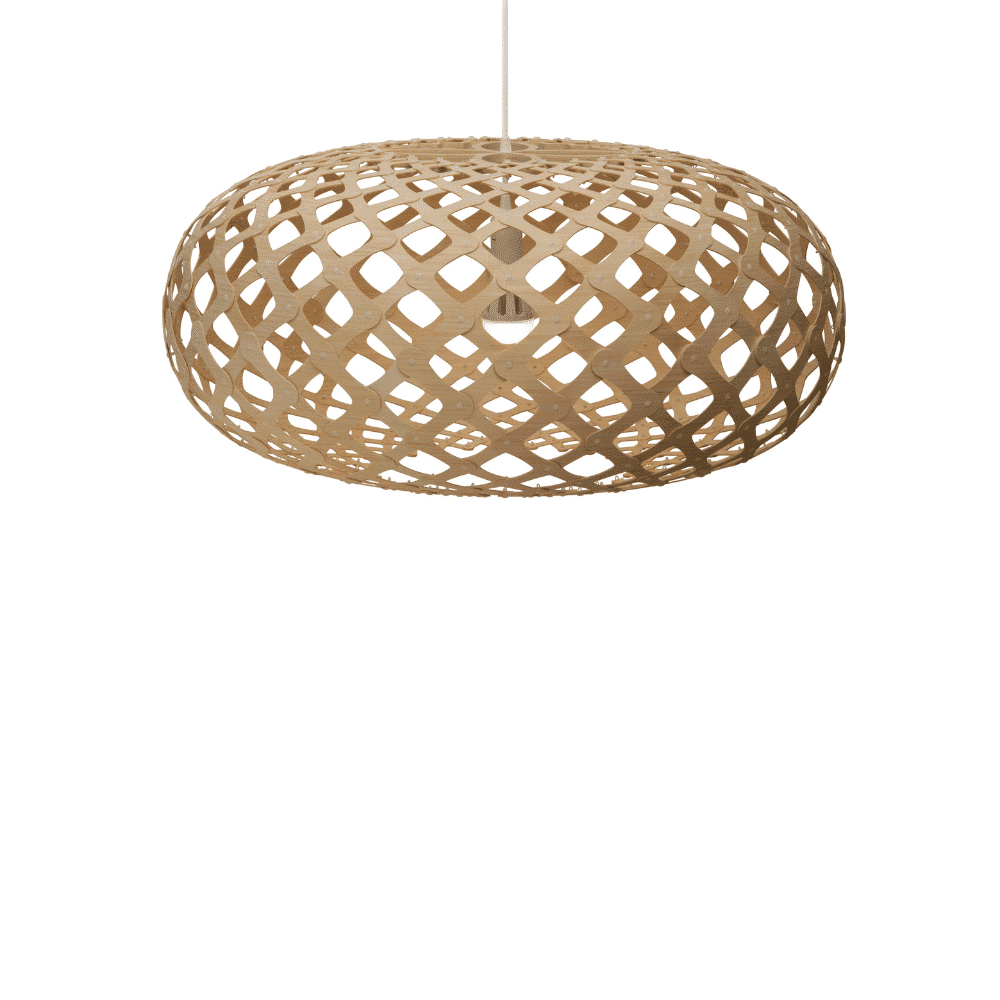
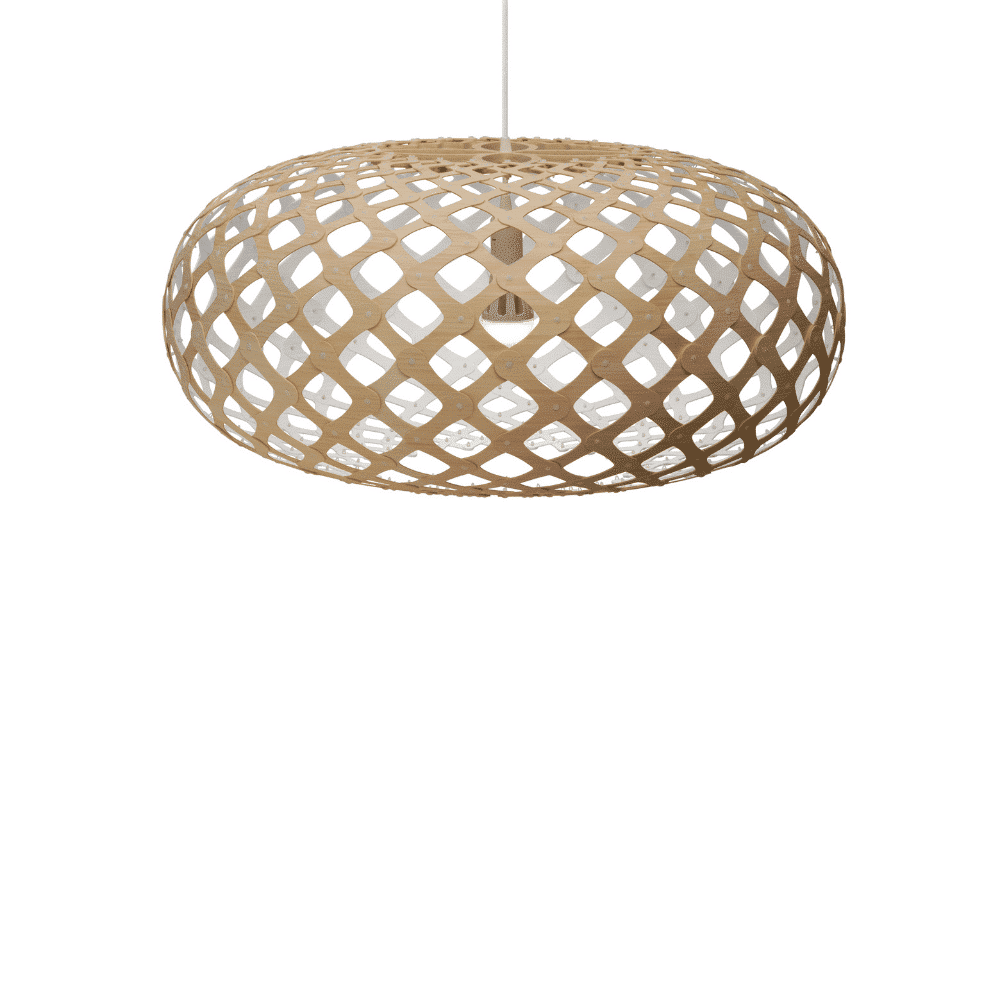
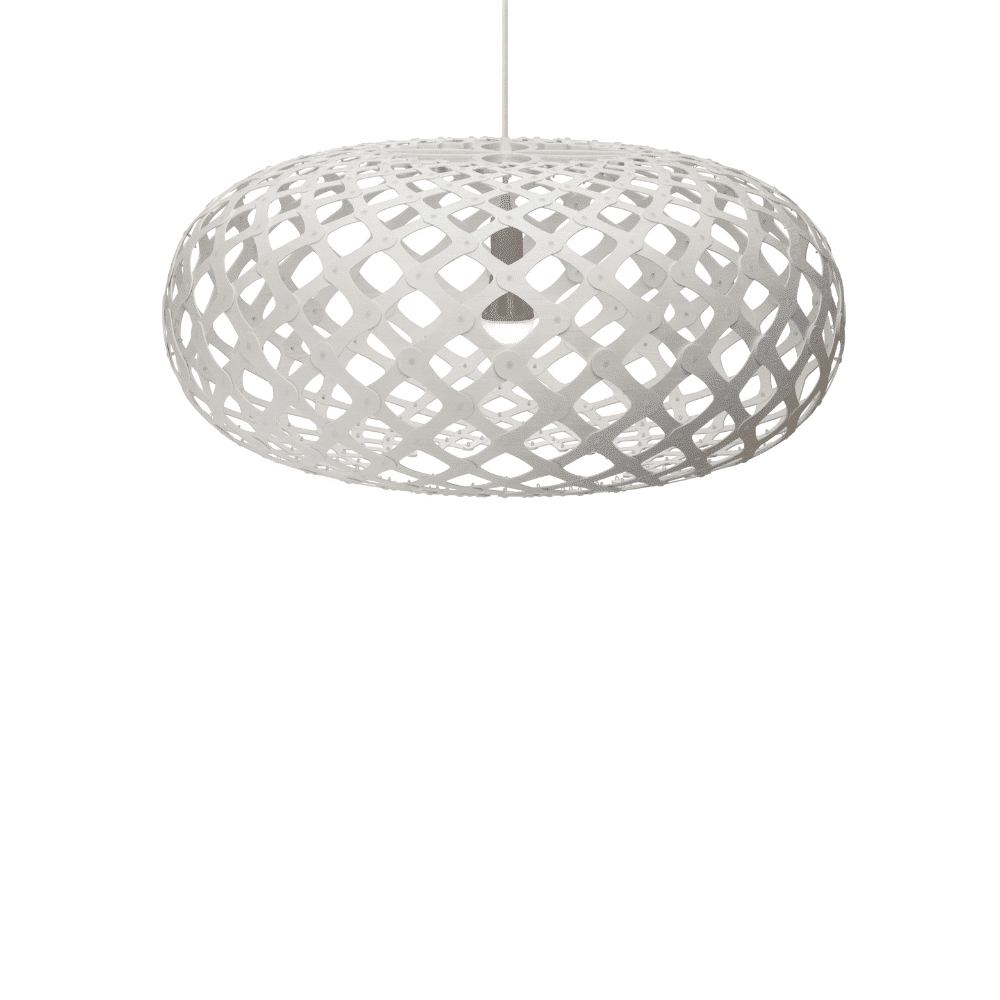
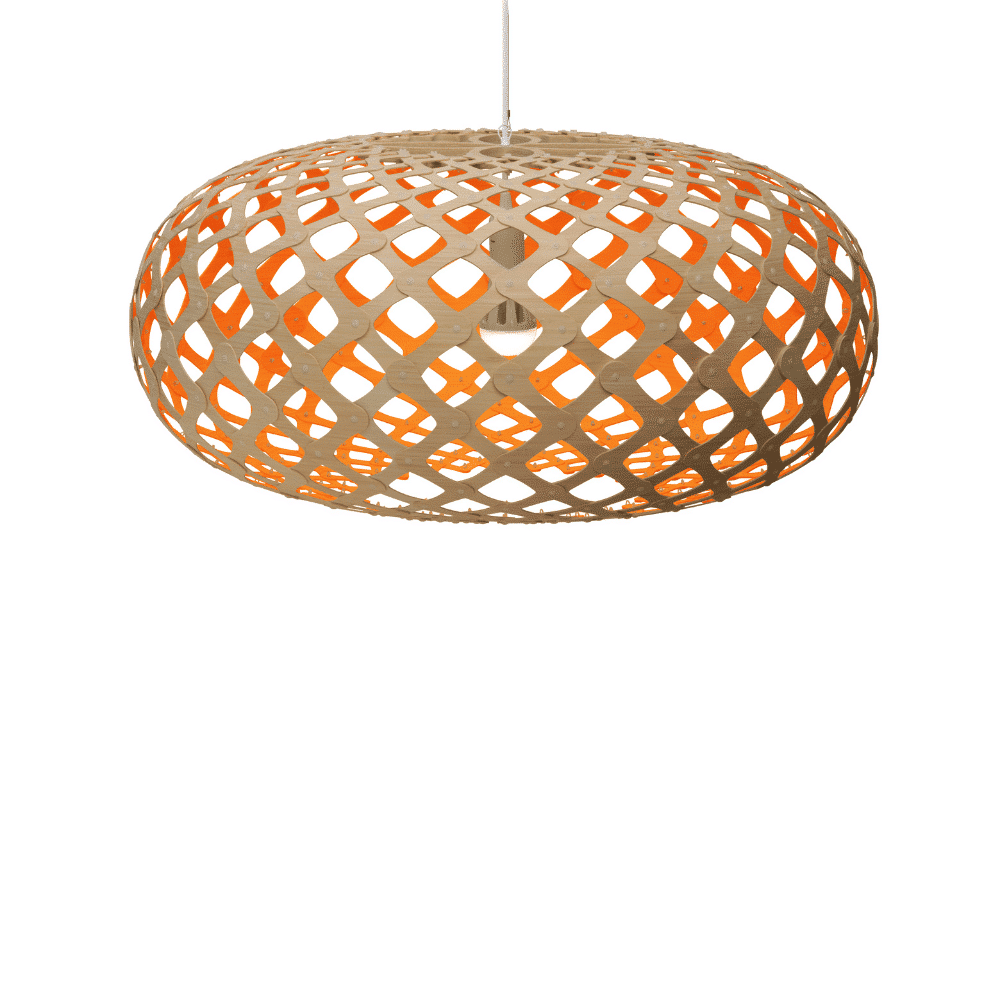
Black, White, Wood

Lamp interior color

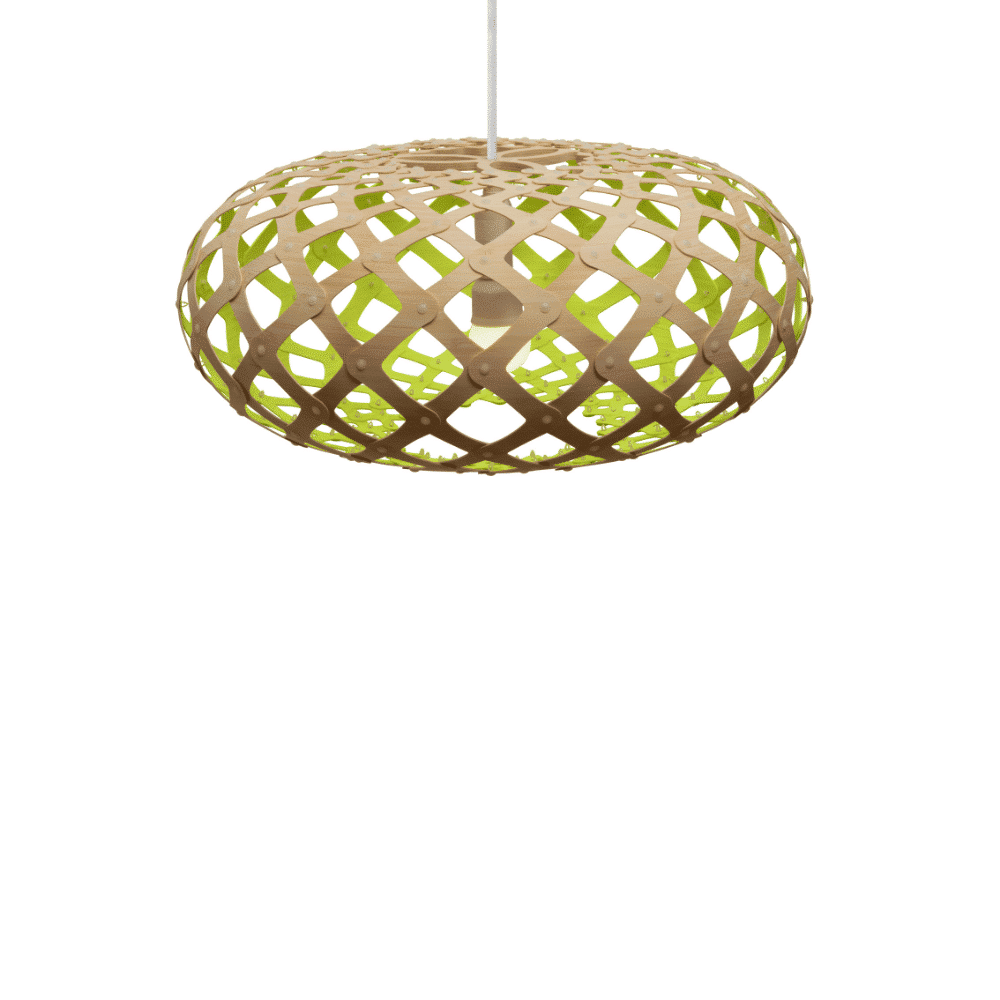
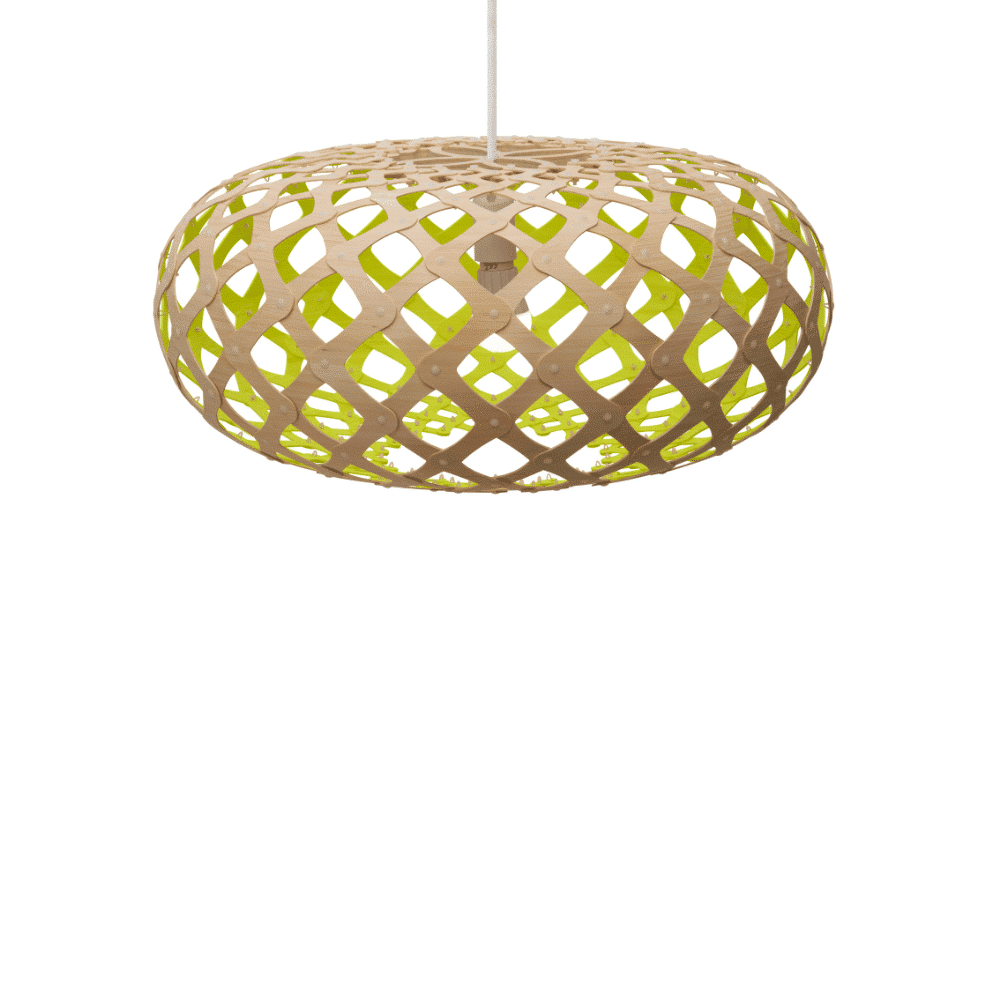
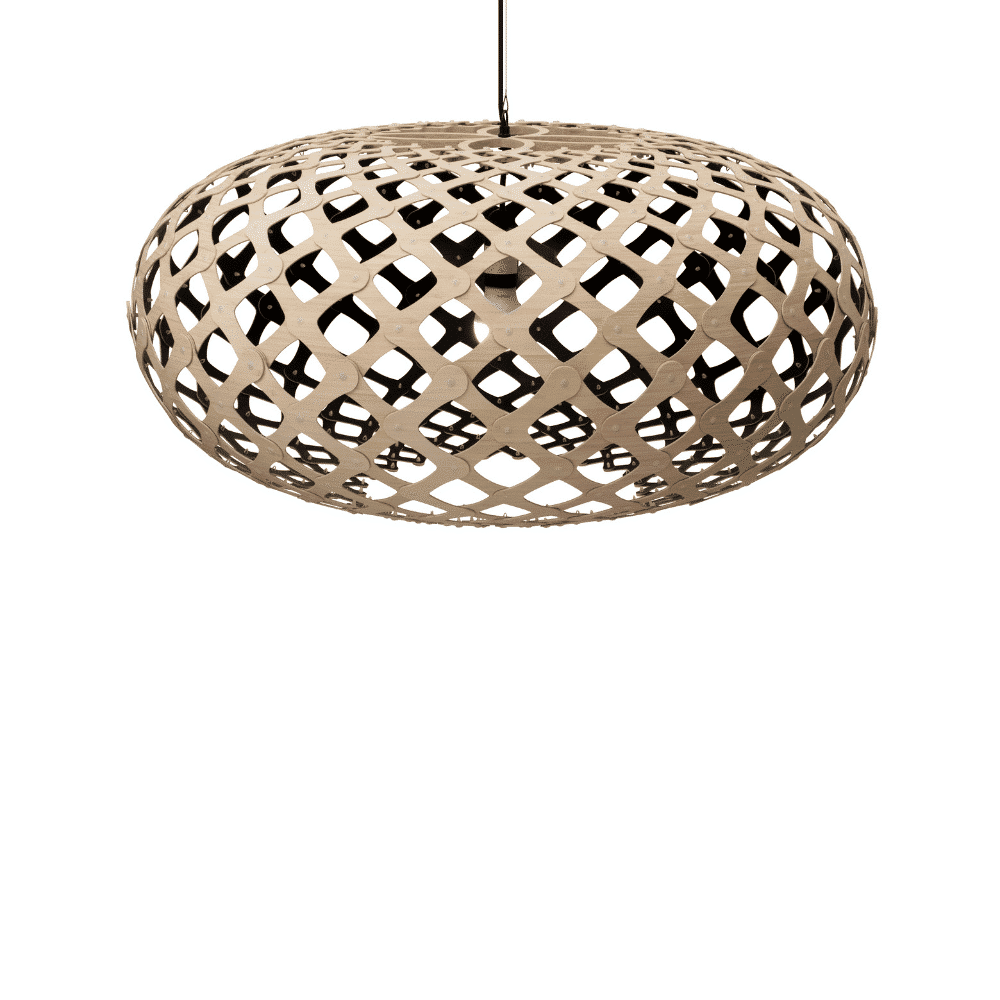
Black, Light Blue, Lime, Orange, Pink, Red, Water, White, Wood

Material

Wood

Product's main material

Bamboo plywood

Bulb included

Not

Bulb type

E27 (E26 USA)

Weight

0.5

Country of origin

New Zealand

Description

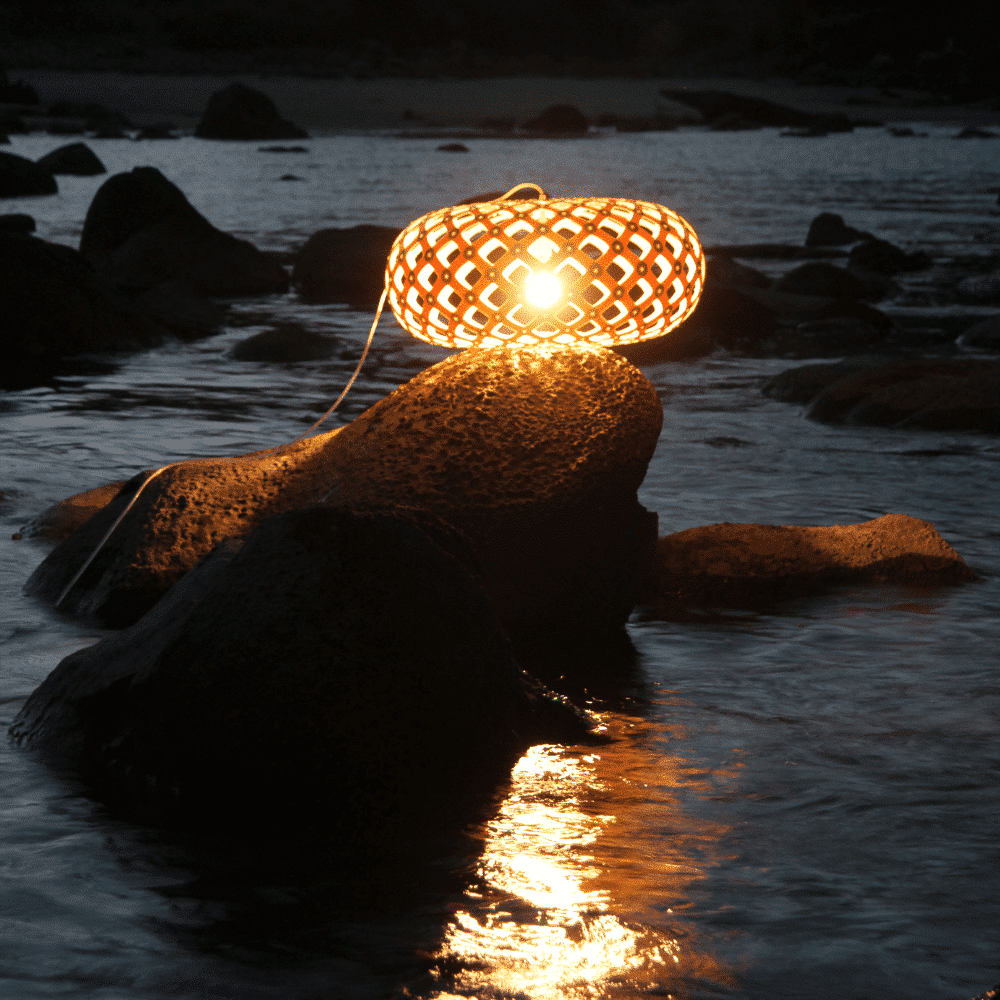
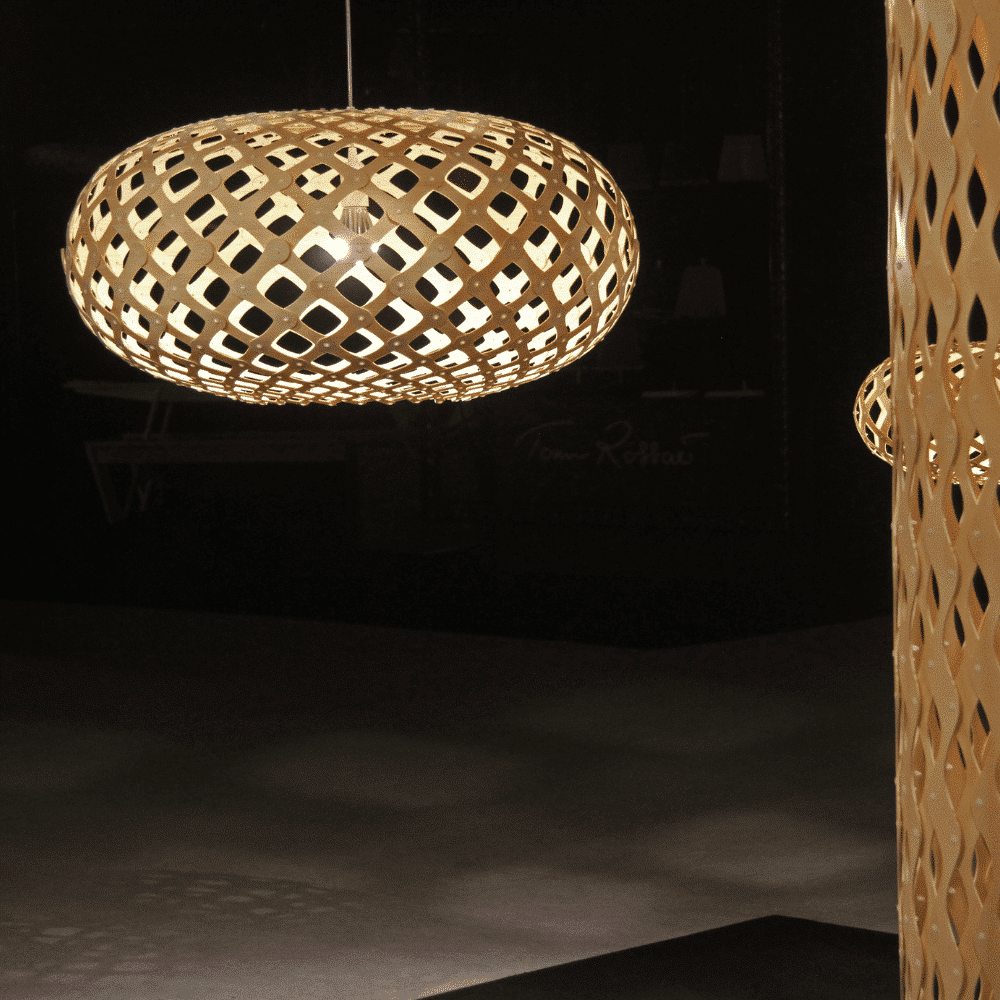
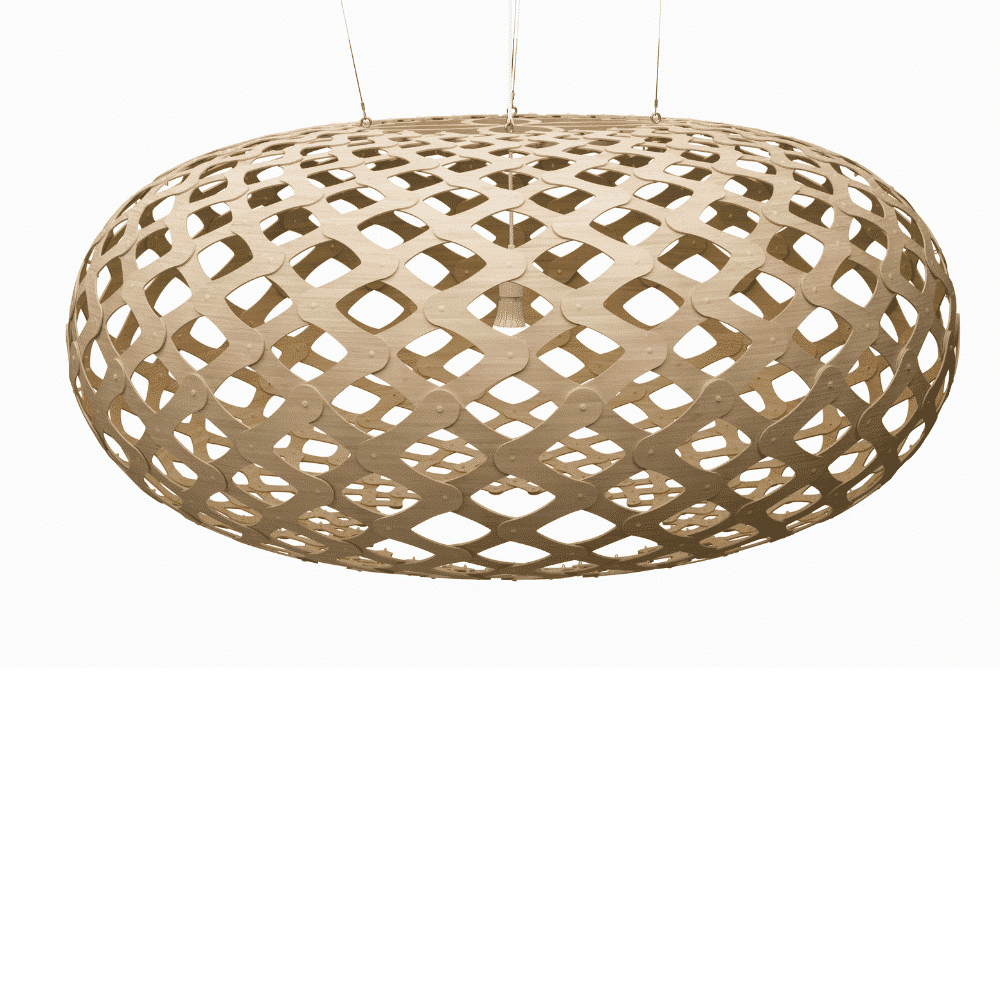
The shape of the sustainable Kina lamp comes from the shell of a sea urchin, which in New Zealand is called Kina by the indigenous Māori people. David saw one frozen under the Antarctic ice during a visit there in 2004. The shell had absorbed enough heat from the sun to melt the surrounding ice. He used the same mathematical formula as Coral and Floral to develop the design and make one from thin plywood. Kina is often used in dining settings, as its open design allows clear light to reach the dining surface. Kina features a woven aesthetic with soft, rounded joints, interlacing the fine-grained bamboo. The range of sizes makes Kina an ideal choice for any space, from a small bedroom to a large foyer or waiting room.

It is shipped in environmentally friendly packaging.
Easy home assembly using PDF or online video.
Five sizes.
12 standard color options (custom colors available upon request).
It comes with a suspension cable (if the size is applicable), cable and bulb holder (and ceiling canopy for North American orders).
An E26/E27 lamp/bulb is required.
Intended for dry indoor spaces.

Note: Kina’s painted options are generally cut to order with a lead time of up to 8 weeks. If you need your lamp urgently, please email us for current stock levels.


Dimensions:

440mm (17″)

Width: 440mm (17″) – Height: 200mm (8″) – Depth: 440mm (17″)

600mm (24″)

Width: 600mm (24″) – Height: 280mm (11″) – Depth: 600mm (24″)

800mm (31″)

Width: 800mm (31″) – Height: 370mm (15″) – Depth: 800mm (31″)

1000mm (39″)

Width: 1000mm (39″) – Height: 420mm (17″) – Depth: 1000mm (39″)

1400mm (55″)

Width: 1400mm (55″) – Height: 650mm (26″) – Depth: 1400mm (55″)

Short Description

The shape of the sustainable Kina lamp comes from the shell of a sea urchin, which in New Zealand is called Kina by the indigenous Māori people. David saw one frozen under the Antarctic ice during a visit there in 2004. The shell had absorbed enough heat from the sun to melt the surrounding ice. He used the same mathematical formula as Coral and Floral to develop the design and make one from thin plywood. Kina is often used in dining settings, as its open design allows clear light to reach the dining surface. Kina features a woven aesthetic with soft, rounded joints, interlacing the fine-grained bamboo. The range of sizes makes Kina an ideal choice for any space, from a small bedroom to a large foyer or waiting room. It is shipped in environmentally friendly packaging. Easy home assembly via PDF or online video. Five sizes. 12 standard color options (custom colors available upon request). It comes with a suspension cable (if the size is applicable), cord, and bulb holder (and ceiling canopy for North American orders). An E26/E27 lamp/bulb is required. Intended for dry indoor use.

David Trubridge

The mastery of nature

David Trubridge Ltd was established in 1995 when David began expanding his work beyond his small-scale designer-maker business. David’s work gained recognition in 2001, establishing a model for kit-set products designed to minimize environmental footprint. The company takes pride in conducting Life Cycle Assessments (LCAs) and producing Environmental Product Declarations (EPDs). David Trubridge is driven by a deeply rooted environmental philosophy that encompasses both design and production—a principle held to be even more important than profit. This ethos is demonstrated by the company's commitment to sourcing sustainable materials; whenever possible, all timber comes from sustainably managed plantations in New Zealand or the United States. The wood is left in its natural state where appropriate, using non-toxic natural oils rather than harmful solvents. From a design perspective, the products utilize the minimum amount of material and are created with a focus on longevity, rather than mimicking fast-moving trends. Shipping and freight impacts are often reduced through the use of the "Seed System."

Eco-designer: During an interview with the Smithsonian's Cooper-Hewitt National Design Museum, Trubridge answered the fundamental question of why he designs: "To provide cultural nourishment, to tell stories, to reach people emotionally and spiritually; objects are a vehicle for the nourishment that is so sorely lacking in the pragmatic, consumer-driven items that surround us. And the other reason I design is to recreate that vital connection with nature—something we have largely lost while living in isolated cities." David Trubridge graduated from the University of Newcastle in England in 1972 with a degree in Naval Architecture (Boat Design). While working part-time as a forester in rural Northumberland for a brief period, he taught himself furniture making. His carefully crafted designs were exhibited throughout the UK. In 1981, Trubridge and his wife Linda set sail around the world with their two young children. They sold everything they owned and bought *Hornpipe*, the yacht that would be their home for the next ten years as they sailed across the Caribbean and the Pacific. The family arrived in New Zealand in 1985. Deeply inspired by his impressions of the Pacific, Trubridge began developing furniture that maintained strong ties to the sea. His life changed dramatically with the relaunch of the "Body Raft," transforming the business from a small-scale operation into one with a significant presence in the international lighting and furniture markets. Trubridge has always been deeply passionate about the environment—a passion deepened by his time at sea. In 2004, he was selected for the Antarctica Arts Fellowship program, allowing him to spend several weeks in that remote and ecologically fragile region. It was an experience that inspired Trubridge to further pursue environmental sensitivity, both as an individual and as the driving force behind a company that continues to expand. David's designs have appeared in countless international publications—including the most influential ones—as trendsetters and examples of environmentally responsible design. In 2008, the French magazine *L'Express* named him one of the 15 best designers in the world, and in 2012, the Centre Pompidou in Paris acquired his installation *Icarus* for its permanent collection.