Sustainable materials
quality raw materials
Patented sustainable materials
Innovation at the service of quality and design
The spearhead of the eco-design, the demonstration that sustainability, innovation, quality and design are and will be decisive in the sustainable development of our society.
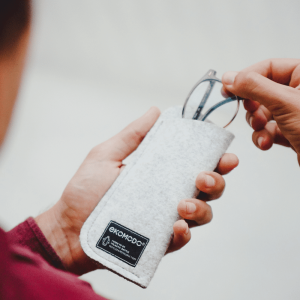
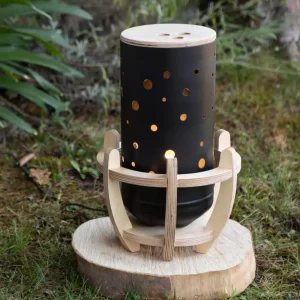
Feltwood®
The material Feltwood® It is a new material made only of vegetable fibers. A material that respects people and the environment.
An alternative to plastic that is renewable, recyclable and biodegradable.
Feltwood® material is strong and durable like wood, and can also be molded, so it has a wide range of applications.
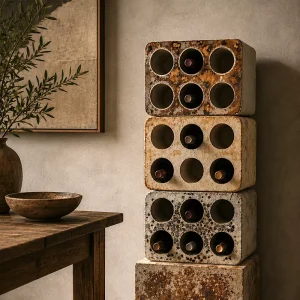
Woodio® Resin
The material Woodio® It is a fully waterproof wood composite designed as a more environmentally friendly alternative to ceramics and stone.
Its ecological advantage comes from the low consumption of water and energy in its production, its high biological content, its light weight and its recyclability at the end of its useful life.
The carbon footprint of Woodio products is up to 80% lower than that of similar products based on ceramics and stone. The Woodio material is very durable, which guarantees the longevity of our products.
At the end of their life cycle, Woodio panel products and materials can be shipped to our factory in Finland, from where the material is shipped for use in cement production.
If it is not possible to deliver at your factory, Woodio’s wood compound can be classified into the energy fraction, where the material ends up in an incineration plant for energy production.
Janka® Board
The board Janka® It has genuine and differential characteristics. Really!
Scratch and shock resistant coating.
Durable material coated by a high pressure HPL laminate.
Recyclable and biodegradable material.
It is produced from forest waste and eucalyptus wood.
Formaldehyde free board and chemicals.
Take advantage of the thermoplastic properties of lignin as a natural adhesive, without glues.
Dense and hard, like the usual furniture that lasts a lifetime.
Density of 900 kg/m3 (usual is 450-600 kg/m3 of conventional boards), hardness of 3618 psi (melamines have 2144 psi).
Wood
Warmth, strength and durability
The wood From the point of view of sustainability as raw material, is one of the most complete and strategic natural materials, but as always, its environmental performance depends on Origin, forest management and final use.
The wood is A natural and sustainable raw material If they are managed correctly:
Certified origin and preferred local.
Efficient and durable use (structures, furniture).
Recycling and reuse at the end of useful life.
Nature of wood
- Type of material: Plant, structural, solid, mainly composed of cellulose, hemicellulose and lignin.
- Origin: Slow or fast growing tree trunks.
- States of use: solid, laminated, plywood, boards (DM, MDF, OSB).
Sustainable advantages
Renewable
- If it comes from sustainably managed forests (FSC, PEFC), it is renewable resource.
- Trees absorb CO₂ as they grow, acting as carbon sinks.
Low energy footprint
- Its transformation (sawing, drying) requires Less energy than steel, cement or aluminum.
Biodegradable and recyclable
- At the end of its useful life, it can be reused or composted.
- By-products (sawdust, chips) can be used as biomass or agglomerated panels.
Technical properties
- Light and sturdy.
- thermal and acoustical insulation.
- Durable if protected from moisture, insects and fungi.
Environmental impacts to consider
Deforestation
Illegal or unregulated logging Destroy biodiversity and ecosystems.
Transport
Heavy and long distance wood Increase the carbon footprint.
Chemical processes
Varnishes, glues and preservatives can Reduce biodegradability and increase toxicity.
Textiles Naturales
From the point of view of sustainability as a raw material, the Natural textiles occupy a relevant position but not without nuances. Its environmental performance depends on Origin of fiber, agricultural or livestock practices, industrial processing and durability of the final product
What is meant by natural textiles
They are fibers obtained directly from Biological origins, without petrochemical synthesis:
Main families
- Vegetables: cotton, linen, hemp, jute, ramie.
- Animals: wool, silk, alpaca, cashmere.
- Regenerated cellulosics (natural origin, industrial process): Viscose, Modal, Lyocell (Tencel™).
Main environmental impacts
This is where the analysis must be rigorous and not idealized.
Water use
- conventional cotton: Very water intensive.
- Linen and hemp: low water consumption.
- Wool: Indirect impact linked to the management of cattle.
Agrochemicals and soil
- Conventional cotton: high use of pesticides.
- Poorly managed extensive crops degrade the soil.
- Alternative: Ecological and regenerative agriculture.
Processing and finishing
- Spinning, bleaching, tinting and finishing can be highly polluting.
- The final impact usually depends more on the chemical processing that of the fiber itself.
Arid
Aggregates are not considered “green materials” by definition, but can be sustainable by management.
From the perspective of sustainability, aggregates are not the problem itself; The problem is the extraction and use model.
They are materials:
- Technically excellent.
- environmentally neutral in use.
- essential and irreplaceable on a large scale.
The sustainability of aggregates is based on three pillars:
- Proximity.
- Recycling and circularity.
- responsible exploitation of the territory.
Types of aggregates
According to its origin
Natural aggregates
Origin: They come directly from geological formations.
a) Quarry aggregates (shredded rock)
- Origin: limestone, dolomies, granites, basalts, porphyries.
b) Gravel or alluvial aggregates
- Origin: rivers, river terraces, natural deposits.
Recycled aggregates
- They come from construction and demolition waste (RCD).
- Composed of crushed concrete, ceramics and mixtures.
Ceramics
The ceramics, analyzed as Raw material and material transformed from the perspective of sustainability, it is an interesting case because it combines Natural origin and great durability with Energy-intensive industrial processes. Not a “green” material by definition, but Can be sustainable by performance and life cycle.
Nature of ceramics
- Origin: Natural mineral raw materials (clays, kaolins, feldspars, quartz).
- type of material: Inorganic, non-metallic.
- Key transformation: High temperature cooking (900–1,300 °C).
- final state: Very stable, hard, inert.
Basic Conclusion
ceramics It is not renewable (comes from geological resources), but it is Abundant, natural and non-toxic in use.
Advantages from sustainability
Extreme longevity
- useful life of decades or centuries.
- It does not degrade with the sun, water or chemical agents.
- Its durability partially offsets its initial impact.
Inert and healthy material
- Does not emit VOC.
- Does not release microplastics.
- Suitable for healthy indoors and hygienic environments.
Low maintenance
- You don’t need regular treatments.
- Resists intensive cleaning without special products.
Potential local origin
- The clays are usually proximity resources, reducing transportation.
Key environmental impacts
Here is the core of the debate.
High energy consumption
- Cooking is the greatest environmental impact.
- traditionally dependent on natural gas.
CO₂ emissions
- direct (combustion) and indirect (electricity).
- less than cement per kg, but relevant.
Mining extraction
- Alteration of the landscape if not properly restored.
Ceramics and circular economy
Reuse
- tiles, bricks and tiles can be reused directly in rehabilitation.
Recycling
- Limited: Once cooked, the pottery cannot be “reverted”.
- can be crushed as Recycled ceramic aggregate for firm or mortar.
By-products
- powders and cuts are reincorporated into the production process.
Cork
The cork is a exemplary material from the point of view of sustainability: Renewable, recyclable, with negative carbon footprint in many uses and with a positive social impact in Mediterranean rural territories. It is difficult to find another material that combines in such a balanced way Technical benefits, low environmental impact and ecological value.
Origin and renewability
Tthe cork procedure of the Cork oak cortex (Quercus suber), a characteristic tree of the western Mediterranean (Portugal, Spain, southern France, Italy and North Africa).
- Non-destructive extraction: The bark is manually removed every 9–12 years without cutting down the tree.
- Long life of the cork oak: Can live 150–200 years, allowing multiple harvests.
- Renewable resource: As long as the forest is well managed, the supply is continuous.
This model makes cork a clear example of Circular economy based on forest systems.
Positive environmental impact
Carbon capture
- UN cork oak Absorbs more CO₂ after each uncork, since you need to regenerate the cortex.
- The cork retains carbon throughout its useful life; cork products act as carbon sinks.
Low ecological footprint
- production with Very low energy consumption compared to synthetic materials.
- Minimum waste: practically All the extracted cork is used (plugs, insulation, granulates).
- Reused by-products to generate thermal energy in the factories themselves.
Biodiversity and territory
The cork oaks They are ecosystems of high ecological value:
- They harbor great biodiversity (including protected species).
- predominant desertification and soil erosion.
- They set rural population and support traditional local economies.
From the point of view of comprehensive sustainability (environmental, social and economic), this aspect is especially relevant.
Types of cork
In the technical and commercial field, cork is usually classified Due to its origin and its transformation process, since this determines its benefits, cost and applications. Below are the details of Main types of cork,the natural cork, the Black cork and the solid cork:
Natural cork (or white cork)
What is it?
It is the cork as it is obtained from the cork oak bark, Without clumping or reheating, only boiled, stabilized and cut.
Features
- Color: light beige / light brown.
- 100% natural material, no additives.
Solid cork
It refers to pieces of Uncut natural cork, used in block, table or slab.
Features
- It can be natural cork or black cork (if expanded).
- maximum naturalness.
Natural black cork (expanded cork)
This is one of the most interesting materials from a sustainable point of view.
What is it?
granulated cork Expand and agglomerate only by heat and steam, without queues.
own suberin of the cork acts as a natural binder.
Key Features
- Color: Black / Anthracite.
- 100% natural (no additives).
- higher density than white cork.
Metal
The Metals, analyzed as raw material from the point of view of sustainability, have a profile dual: They have a High impact in the extraction and production phase, but they offer Durability, almost infinite recyclability and high technical performance. They are not sustainable by origin, but They can be by life cycle.
THE METALS They are not renewable, but they are permanent and highly recoverable.
Main advantages from sustainability
Almost infinite recyclability
- can be recycled No significant loss of property.
- Recycling requires much less energy than primary production:
- Aluminum: ~5–10% of the original energy.
- Steel: ~25–30%.
Durability and resistance
- long useful life (decades or centuries).
- Very good strength/weight ratio.
- Ideal for repairable structures, infrastructures and products.
Real circularity
- Metals have economic value at the end of his life.
- high real recovery rates (not only theoretical).
Critical environmental impacts
Mining
- severe alteration of the territory.
- generation of mining waste.
- Water and biodiversity risks if there is no control.
High energy consumption
- very energy-intensive primary production.
- Historical dependence on fossil fuels.
Emissions and toxicity
- CO₂, SO₂, NOx emissions.
- heavy metals associated with certain processes.
Paper and cardboard
The paper and the cardboard, analyzed as raw materials from the point of view of sustainability, are key materials of the bioeconomy, with an environmental profile Very dependent on the origin of the fiber, the recycled content and the intended use.
They are Natural, Renewable and Biodegradable Materials, provided that the fiber comes from sustainably managed forests.
Well managed, they are among the most sustainable materials; misused, they can lose much of that advantage.
Advantages from sustainability
Renewability and carbon capture
- They are derived from wood, which is a renewable resource.
- During its useful life, paper and cardboard They store carbon.
High recyclability
- They can be recycled 5–7 times before the fiber loses quality.
- Widely implemented recycling infrastructure.
Low toxicity in use
- They do not emit VOC.
- Suitable for food contact (according to treatment).
Low footprint in transport
- very light in relation to its function.
- especially efficient in packaging.
Relevant environmental impacts
Water and energy consumption
- Pasta manufacturing requires large volumes of water.
- The impact depends on the type of pasta (mechanical vs. chemical).
Chemical processes
- Chlorine bleach (increasingly less common).
- Inks, glues and coatings reduce recyclability.
Inefficient use
- Very short shelf life in single-use applications.
Synthetic textiles
The Synthetic textiles, analyzed as raw material from the perspective of sustainability, represent one of the most problematic and controversial of the materials sector. offer Outstanding technical features, but its environmental and systemic impact is high, especially in the long term.
What are synthetic textiles
Origin: Synthetic polymers, mostly derived from the oil or natural gas.
Main types:
Polyester (PET)
Nylon / Polyamide
Acrylic
Elastane (spandex)
Process: Chemical polymerization + industrial yarn.
Basic Conclusion
They are non-renewable materials, with built-in high energy and environmental persistence.
Key environmental impacts
Fossil dependency
non-renewable raw material.
High carbon footprint in production.
Microplastics
They release microfibers in washing and use.
Accumulation in rivers, oceans and food chain.
Long-term impact not yet fully quantified, but critical.
Non-biodegradable
Decades or centuries persist.
They make management difficult at the end of the useful life.
Toxicity
Additives, dyes and chemical finishes.
environmental and health risk if they are not regulated.
Recycled plastic
The recycled plastic, analyzed as raw material from the point of view of sustainability, it’s a material better than virgin plastic, but It is not a sustainable material in the strict sense. Its value is that Reduce an existing problem, not in that it is environmentally neutral. It is therefore a Mitigation material, not a definitive solution.
Advantages from sustainability
Reduction of impact against the virgin
- lower energy consumption.
- lower CO₂ emissions.
- Reduce waste in landfill and natural environment.
In ACV, almost always better than virgin plastic.
Take advantage of an existing waste
- fits into strategies Circular economy.
- Especially valuable in sectors with difficult replacement (light packaging, technical textile).
Known benefits
- It maintains many technical properties of the original plastic.
- Compatible with existing industrial processes.
Limits and structural problems
FINITE RECYCLING
- mechanical recycling degrades the polymer.
- After several cycles, it ends up being a residual or “downcycling”.
Microplastics
- It continues to release microplastics during use and degradation.
- It does not eliminate the underlying environmental problem.
Mixtures and additives
- They make real recycling difficult.
- variable quality.
- Pollution risks in sensitive uses.
False “green” perception
- can promote the Continuous use of plastic under a sustainable narrative.
- Greenwashing risk if used in disposable products.
Glass
The glass, analyzed as Raw material and material from the point of view of sustainability, occupies a position Intermediate but very solid: Not renewable, but it is Inert, extremely durable and 100% recyclable without quality loss. Its sustainability depends above all on the recycled content, the energy used and the end use.
Advantages from sustainability
Total recyclability
- can be recycled Infinitely no property loss.
- Recycled glass (calcín):
- Reduces energy consumption.
- Reduces CO₂ emissions.
- Avoid extraction of new raw materials.
Each increase in recycled content directly improves your environmental profile.
Inertia and health
- Does not emit VOC.
- Does not release microplastics.
- Does not react with food or indoor environments.
Durability
- Very long useful life.
- Does not age by UV radiation.
- Ideal for permanent uses.
Transparency and natural light
- Reduces need for artificial lighting.
- It contributes to the comfort and energy efficiency in buildings (well designed).
Key environmental impacts
High energy consumption
- Fusion is energy intensive.
- traditionally dependent on natural gas.
Emissions
- CO₂ of combustion and decarbonation.
- Less than metals, greater than wood or cork.
Weight and transport
- Heavy material → Relevant logistics impact.
- Local production is key.
Glass and circular economy
Real closed system
- Container glass is one of the best examples of real circularity.
- effective selective collection in many countries.
Reuse
- Returnable bottles significantly reduce the footprint against a single use.
Limitations
- Mixtures of colors or contamination make recycling difficult.
- Technical glasses (laminated, tempered) require specific processes.
Biodegradable 3D
When you talk about “3D Biodegradable”, we actually mean Materials for 3D printing that are presented as biodegradable or of biological origin, but whose Real sustainability profile is very dependent on the specific polymer, the context of use and the end of life. It is a similar case to recycled plastic: better than conventional, but with important nuances.
Real environmental impacts
Advantages over conventional 3D plastics
Less fossil dependency.
Less toxicity in printing (PLA).
lower processing energy.
Persistent problems
Generation of plastic waste.
Little industrial composting infrastructure.
Failed parts and discarded prototypes.
long-term microplastics.
3D printing and sustainability: the real key factor
More than the material, what is decisive is The use:
If Sustainable:
Replaces unnecessary industrial production.
Pieces are printed Durable, repairable or functional.
The life of existing products (spare parts) is extended.
Design is optimized (material less).
No Yes Sustainable:
It is printed by sin control test/error.
Short-lived decorative objects are generated.
It is promoted as an “echo” without end-of-life analysis.